
MEDICAL ACNE TREATMENT
Men's acne
Treatment options
Medical approaches tailored to male skin to reduce inflammation, improve skin clarity, and prevent recurrences.
CMQ-CERTIFIED PHYSICIANS · NATURAL RESULTS · SERVICE IN FRENCH AND ENGLISH
to know
Understanding men's acne
Acne affects many men, often more severely than women. Male skin is generally thicker and oilier, and higher testosterone levels further stimulate the sebaceous glands — promoting greater sebum production and acne that is often more cystic and deep-seated. In men, acne frequently affects the jawline, chin, neck, and cheeks, and can be aggravated by shaving, which irritates the skin and can spread bacteria.
Male acne often persists into adulthood and can have a significant impact on self-confidence in professional and social settings — even though men consult less frequently for this issue. It can also leave more pronounced scarring due to the characteristics of male skin.
There is no universal solution, but several medical approaches can help reduce inflammation, improve skin clarity, and prevent recurrences. A medical evaluation is essential to establish a plan tailored to your specific type of acne.
Addressed Concerns
- High levels of testosterone and androgens
- Thick and oily male skin
- Shaving and mechanical irritation
- Chronic professional stress
- Certain sports supplements or protein powders
- Skin bacteria (C. acnes)
Treatment options
Treatment options of men's acne
Six complementary medical approaches tailored to male skin, targeting different types and stages of acne:

IPL – Intense Pulsed Light
PHOTO-REJUVENATION FOR ACNE
IPL can target certain forms of inflammatory acne, residual redness, and pigment spots — with parameters adapted to thicker male skin.
- Inflammatory acne and residual redness
- Improves post-acne marks
- Minimal recovery time
Laser Nd:YAG – Fotona
Deep Targeting of Sebaceous Glands
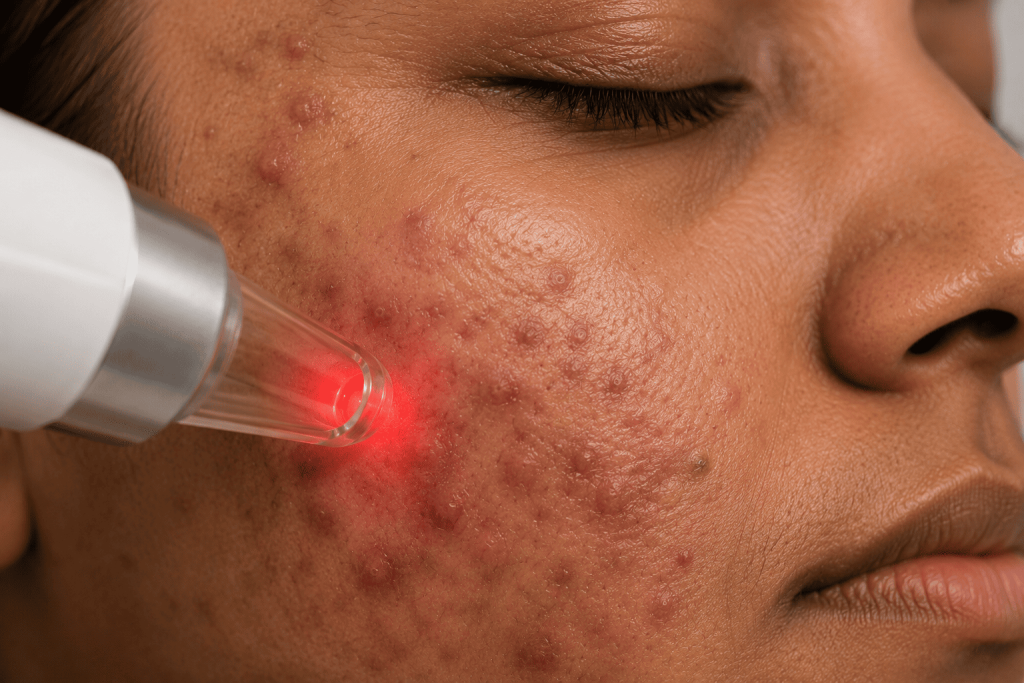
The Nd:YAG laser penetrates the deep layers of male skin to target hyperactive sebaceous glands, reduce active inflammation, and decrease the risk of new breakouts.
- Persistent or recurring acne
- Targets hyperactive sebaceous glands
- Reduces inflammation deeply

Medical Chemical Peels
Controlled Exfoliation and Skin Regulation
Medical peels exfoliate dead skin cells, refine skin texture, and promote regular cell turnover — particularly useful for improving enlarged pores and superficial marks.
- Improves skin texture and pores
- Reduces superficial post-acne marks
- Promotes regular skin renewal

Microneedling
SKIN RENEWAL STIMULATION
Microneedling creates controlled micro-perforations with settings adapted to male skin — improving texture, stimulating collagen, and enhancing the absorption of topical active ingredients.
- Improves skin texture
- Stimulates collagen production
- Facilitates active ingredient absorption

Morpheus8
RADIOFREQUENCY MICRONEEDLING
Morpheus8 combines microneedling and radiofrequency with settings adapted to thick male skin — gradually reducing sebaceous activity and improving overall skin quality.
- Deep dermal stimulation
- Reduces sebaceous gland activity
- Prevents progression to scarring
Phototherapy (Light Therapy)
OPTION FOR RESISTANT ACNE
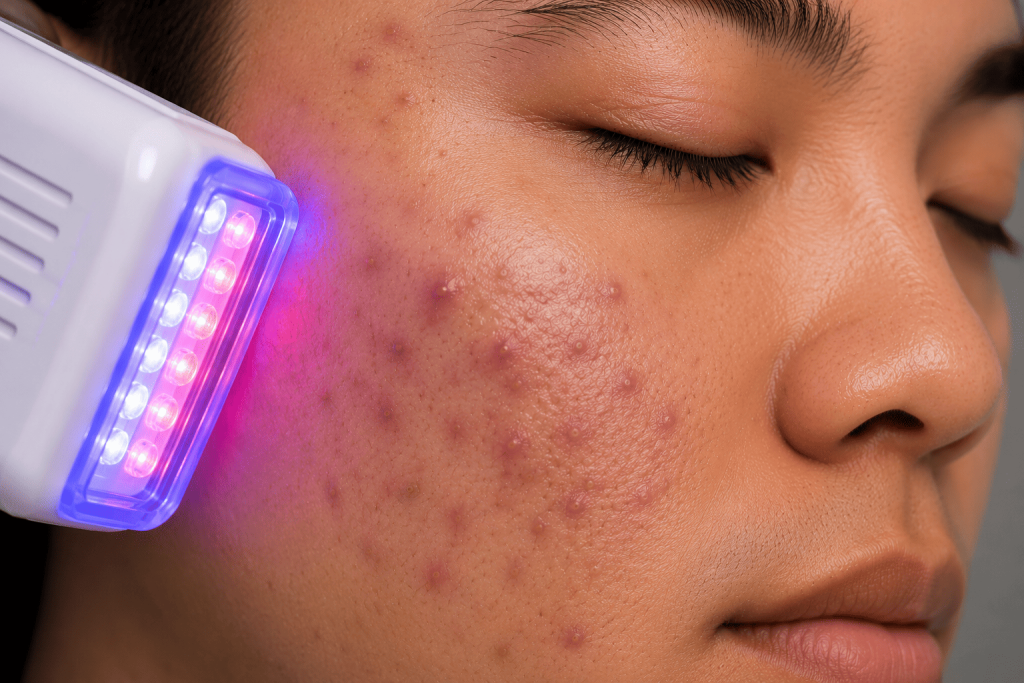
Phototherapy uses targeted wavelengths to act on acne-causing bacteria, reduce sebum production, and control inflammation — with zero downtime.
- Targets acne-related bacteria
- Reduces sebum production
- Zero downtime
Our Recommendation
Choosing the most appropriate approach
The choice of the most suitable treatment depends on several factors that our doctors will evaluate during your free consultation:
Acne type (inflammatory, hormonal, cystic, persistent)
Severity and extent of lesions
Skin Sensitivity and Skin Thickness
Available downtime
Your lifestyle and expectations
For male patients, treatment settings are systematically adjusted to account for thicker and oilier skin. In most cases, a multi-modality approach combining several treatments offers more comprehensive results. A medical evaluation is essential to establish a personalized plan.
Results
Before & After
Real patient results from Medispa Physimed.
These photos are provided for informational purposes only and do not constitute a guarantee of results
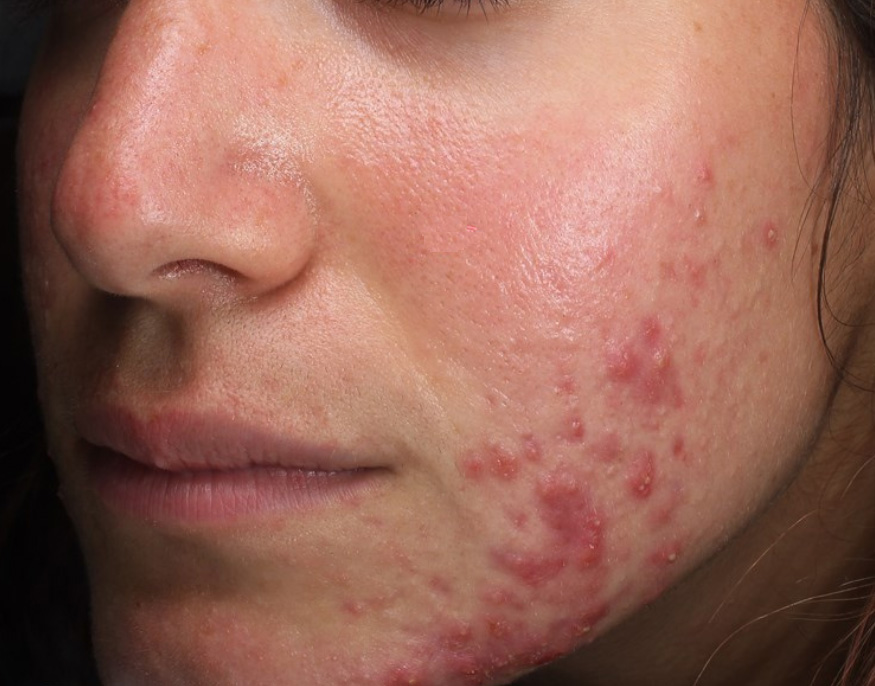 BEFORE
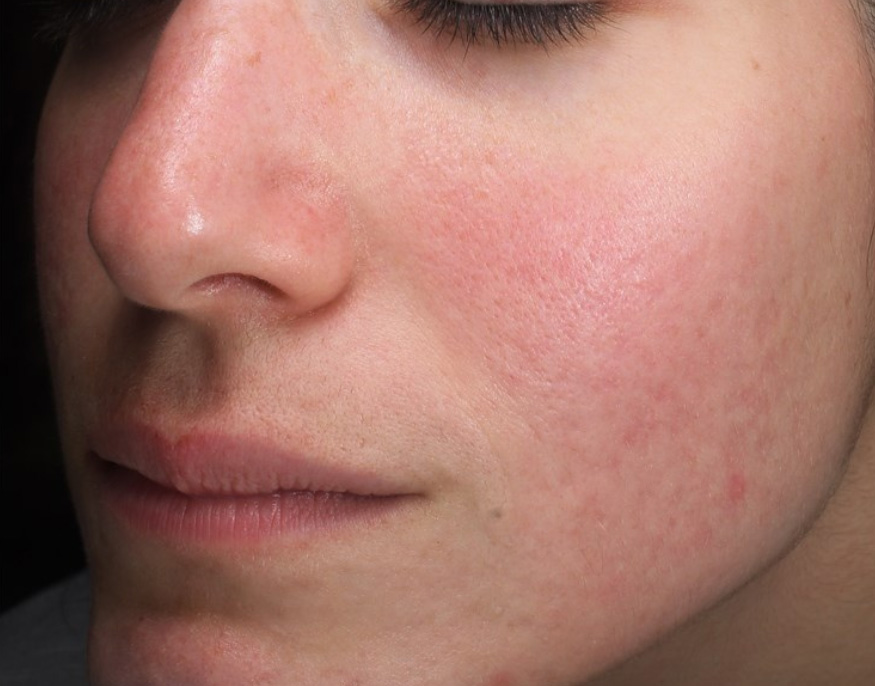 AFTER
AFTER
Acne treatment
Approach to reducing inflammation, improving skin clarity, and preventing relapses
Detailed Treatment Profiles
Detailed Treatment Profiles
In-depth information on each treatment option.
IPL – Intense Pulsed Light
① How It Works
IPL uses broad-spectrum pulsed light targeting the vascular components responsible for inflammatory redness and the pigment associated with post-acne marks. For male patients, settings are adjusted to account for thicker skin, ensuring optimal penetration and efficacy.
IPL can help reduce inflammation in active lesions, fade residual redness, and improve pigmented spots. It integrates particularly well into a comprehensive approach for men with mild-to-moderate inflammatory acne and visible residual marks.
Key information
Anesthesia
None
Invasiveness
Non-invasive
Duration
20 to 45 min
Recovery
Minimal (0-24h)
Discomfort
Low
Session
Series recommended
② What to Expect
Sessions last 20 to 45 minutes. A mild sensation of heat may be felt. Slight post-treatment redness is possible and resolves quickly. Male patients who shave should avoid shaving the treated areas for 24 hours. A series of sessions is recommended.
Ideal for:
- Mild to moderate inflammatory acne
- Residual Post-Acne Redness and Marks
- Fair to medium skin phototypes
- Associated skin tone improvement
③ Results
Results develop and are observed over several weeks, building progressively with each session.
Progressive reduction in redness
Improved skin clarity
Improvement in pigmented spots
Laser Nd:YAG – Fotona
① How It Works
Fotona’s Nd:YAG laser penetrates the deep layers of the skin to act directly on hyperactive sebaceous glands. In male patients, whose sebaceous glands are generally more active due to higher testosterone levels, this deep thermal action can be particularly effective.
The laser can reduce inflammation associated with active acne and decrease the risk of new breakouts. Being non-ablative, patients can quickly resume their normal activities after each session.
Key information
Anesthesia
None
Invasiveness
Non-invasive
Duration
30 to 45 min
Recovery
Minimal ( 0 à 24h)
Discomfort
Low
Session
Series recommended
② What to Expect
Sessions last 30 to 45 minutes and fit easily into a busy schedule. A progressive warming sensation is felt. Mild redness may occur and typically resolves within a few hours. Male patients who shave can generally resume shaving the next day. A series of sessions is recommended.
Ideal for:
- Persistent or recurring male acne
- Highly active sebaceous glands
- Androgen-related acne
- Acne resistant to topical treatments
③ Results
Results build up over the course of the treatment series and can continue to develop over several months.
Gradual reduction in breakout severity
Reduction in inflammation
Improvement in sebum production
Medical Chemical Peels
① How It Works
Medical chemical peels apply a controlled acid solution to the skin's surface for varying depths of exfoliation. For male patients, the depth and concentration are adjusted to account for generally thicker skin. This exfoliation removes dead skin cells that contribute to clogged pores, promotes regular cell turnover, and improves skin texture, enlarged pores, and certain superficial marks. Medical peels are more precise than cosmetic peels.
Key information
Anesthesia
None
Invasiveness
Low
Duration
15 to 30 min
Recovery
A few days
Discomfort
Low to moderate
Session
Series recommended
② What to Expect
Sessions last 15 to 30 minutes. A tingling or warming sensation is felt. Mild redness and flaking are normal in the following days. Male patients should avoid shaving treated areas during the peeling process. A series of sessions is generally recommended.
Ideal for:
- Uneven skin texture
- Enlarged pores
- Superficial post-acne marks
- Mild to moderate acne
③ Results
Results build up over the course of the treatment series and can continue to develop over several months.
Improvement in skin texture
Reduction in enlarged pores
a reduction of enlarged pores
Microneedling
① How It Works
Microneedling creates controlled micro-perforations that trigger the skin’s natural repair response. For male patients, depth parameters are adjusted to account for the greater thickness of male skin to ensure effective stimulation.
This approach improves skin texture, stimulates collagen production, and can enhance the absorption of topical active ingredients used in acne management. In the context of active acne, microneedling can also help prevent scar formation during transitional phases.
Key information
Anesthesia
Topical numbing cream
Invasiveness
Low
Duration
30 to 45 min
Recovery
1 to 2 days
Discomfort
Low to moderate
Session
Series recommended
② What to Expect
A topical numbing cream is applied before the session (30 to 45 minutes). Redness and sensitivity may occur for 24 to 48 hours. Patients who shave must avoid shaving during the recovery period.
Ideal for:
- Improvement in male skin texture
- Transition between active acne and skin healing
- Prevention of acne scars
- Enhancement of topical active ingredients
③ Results
Results build up over the course of the treatment series and can continue to develop over several months.
Gradual improvement in skin texture
Improvement in overall skin quality
Morpheus8
① How It Works
Morpheus8 combines microneedling with radiofrequency energy delivered deep into the dermis. For male patients, parameters are adjusted to account for thicker skin — ensuring that the energy reaches the appropriate dermal depths.
This deep stimulation can help gradually reduce the activity of hyperactive sebaceous glands, which are particularly prevalent in men, improve overall skin quality, and prevent active acne from progressing into scars.
Key information
Anesthesia
Topical numbing cream
Invasiveness
Low to moderate
Duration
30 to 60 min
Recovery
A few days
Discomfort
Low to moderate
Session
3 to 4 recommanded
② What to Expect
A numbing cream is applied before the session (30 to 60 minutes). Redness and mild swelling are possible for a few days. Patients who shave must avoid shaving during the recovery period. A series of 3 to 4 sessions is recommended.
Ideal for:
- Active acne with oily male skin
- Highly active sebaceous glands
- Prevention of acne scars
- Improvement in overall skin quality
③ Results
Results build up over the course of the treatment series and can continue to develop over several months.
Improvement in skin texture
Reduction in shine
Reduction in sebaceous gland activity
Improvement in overall skin quality
Phototherapy (Light Therapy)
① How It Works
Phototherapy uses specific wavelengths — blue and red light — to target the underlying causes of acne. Blue light selectively targets Cutibacterium acnes bacteria, while red light penetrates deeper to help reduce inflammation and sebum production.
Non-invasive and requiring zero downtime, phototherapy is an option particularly well-suited for men whose busy schedules do not allow for extended recovery, or whose acne responds less effectively to other treatments.
Key information
Anesthesia
None
Invasiveness
Non-invasive
Duration
15 to 30 min
Recovery
None
Discomfort
None
Session
Series recommended
② What to Expect
Sessions last 15 to 30 minutes with no discomfort and require zero downtime. Multiple sessions are generally needed to achieve significant improvement. It can easily be integrated as a maintenance treatment.
Ideal for:
- Acne resistant to standard treatments
- Maintenance for mild-to-moderate acne
- Men with limited availability
- Complement to other medical treatments
③ Results
Results can be observed over several weeks. Phototherapy is often used to complement other medical acne treatments.
Gradual reduction in inflammation
Reduction in breakout severity
Reduction in the number of lesions
Ready for
clearer and healthier skin?
Book your free medical consultation. Our physicians will evaluate your skin and recommend the approach best suited to your needs.