
Facial Redness Treatment
Rosacea and Facial Redness – Treatment Options
Personalized medical approaches to reduce redness, diminish visible vessels, and improve skin tone uniformity.
CMQ-CERTIFIED PHYSICIANS · NATURAL RESULTS · SERVICE IN FRENCH AND ENGLISH
to know
What are rosacea and telangiectasia?
Rosacea is a chronic skin condition characterized mainly by diffuse redness in the center of the face—on the cheeks, nose, chin, and forehead. It usually appears between the ages of 30 and 60 and can be temporary, recurring, or persistent.
Rosacea is often associated with telangiectasia, also known as spider veins or visible blood vessels. These small dilated vessels visible beneath the skin are frequently observed on the nose and cheeks.
Both conditions can evolve over time and significantly impact facial appearance and personal well-being. Although there is no cure for rosacea, certain medical laser and light-based approaches can help reduce the appearance of redness and visible vessels, gradually improving tone uniformity.
Several technologies can be considered depending on your skin type, the specific type of rosacea present, and your personal goals.
Contributing Factors
- Sun exposure and UV rays
- Hormonal changes
- Genetic predisposition
- Extreme temperature variations
- Certain foods and alcohol
- Stress and anxiety
Treatment options
Treatment options for Rosacea
Three medical approaches, each tailored to specific rosacea profiles and skin types.
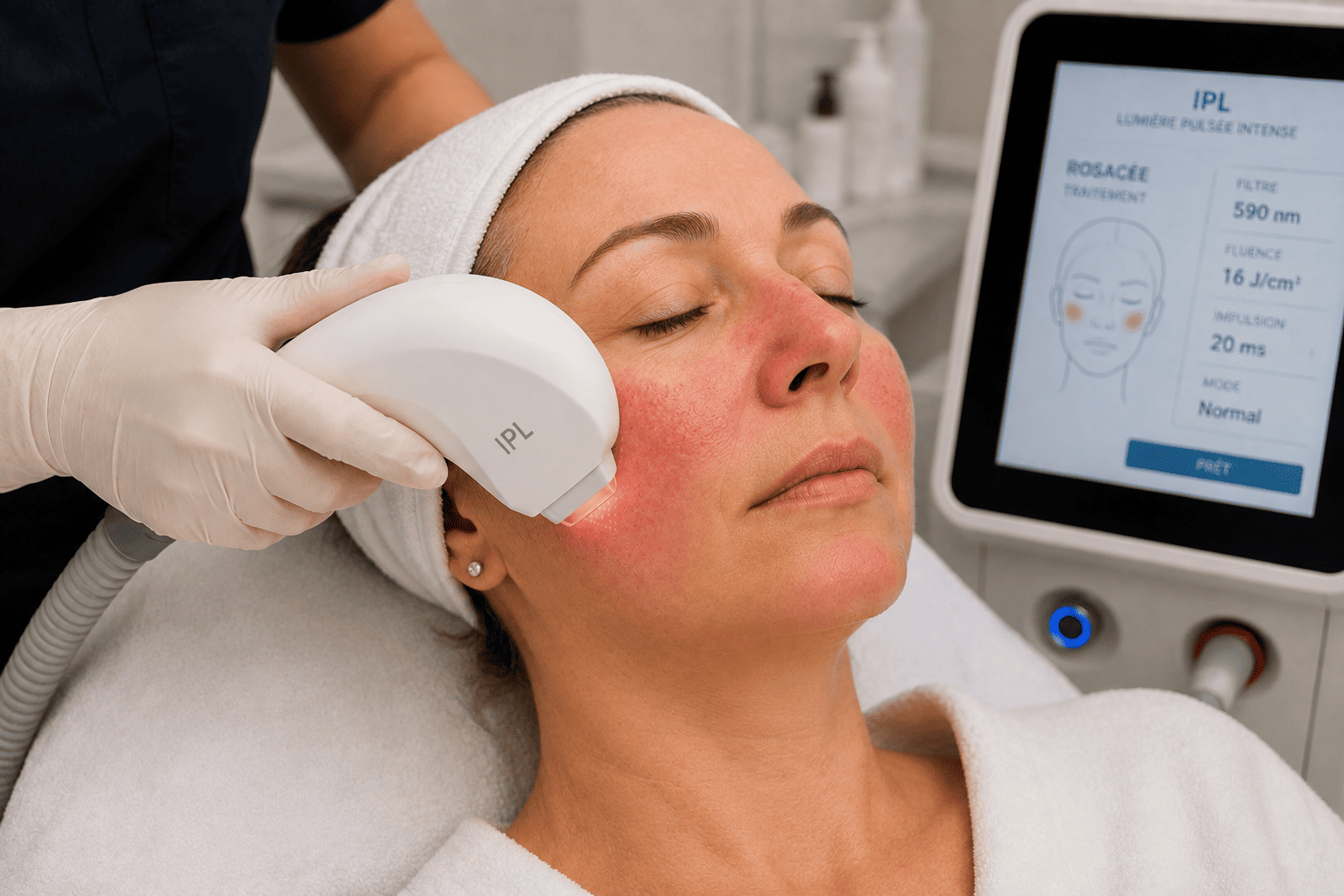
IPL – Intense Pulsed Light
Photorejuvenation Treatment
IPL uses broad-spectrum light to target both vascular and pigmentary components causing redness, contributing to progressive skin improvement.
- Diffuse redness and telangiectasias
- Also treats pigment spots
- Generally short recovery time
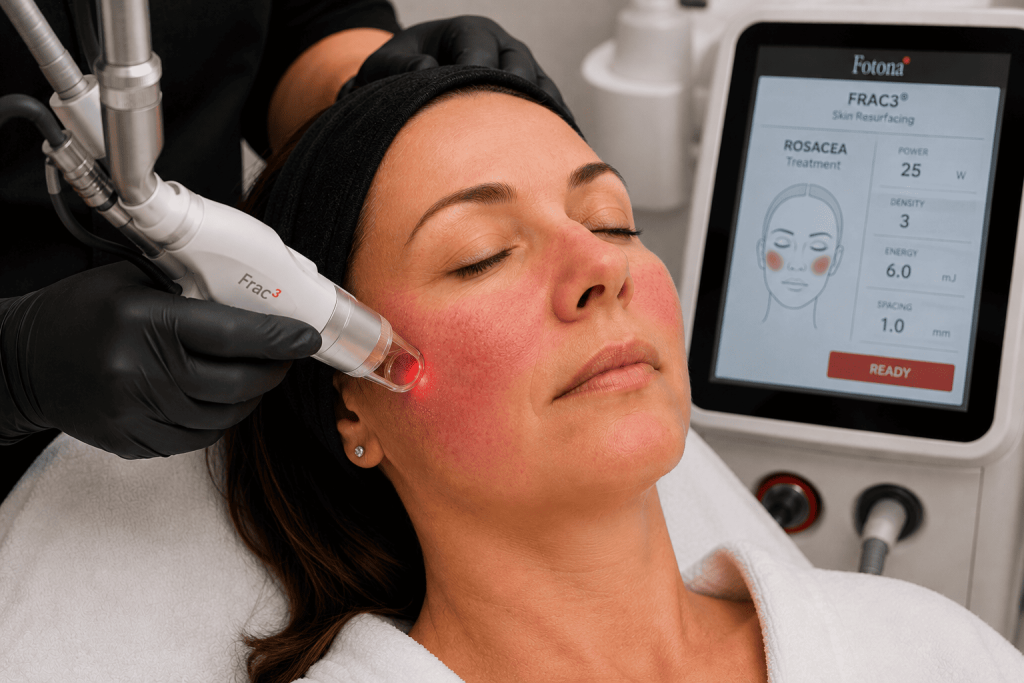
Fotona FRAC3® Laser
Non-Ablative Laser Treatment
The FRAC3® laser delivers targeted thermal micro-stimulations encouraging natural skin renewal and helping reduce rosacea-related redness.
- Diminishes rosacea redness
- Improves skin tone uniformity
- Suitable for different skin types

Vascular Laser
Targeted Vascular Therapy
Vascular lasers specifically target visible dilated blood vessels through selective laser energy absorption by hemoglobin, allowing for their gradual reduction.
- Precise targeting of well-defined vessels
- Progressive reduction in appearance
- Ideal for localized telangiectasias
Our Recommendation
Choosing the most appropriate approach
The choice between IPL, FRAC3® laser, or vascular laser depends on several factors that our doctors will evaluate during your free consultation:
The type of rosacea (erythematous, vascular, or mixed)
Presence or absence of clearly defined visible vessels
Your phototype and skin sensitivity
Desired recovery time
Your personal aesthetic goals
In some cases, a sequential combination of technologies can yield more comprehensive results. A medical evaluation by a laser-specialized physician is essential to recommend the most appropriate approach for your skin profile.
Results
Before & After
Real patient results from Medispa Physimed.
These photos are provided for informational purposes only and do not constitute a guarantee of results
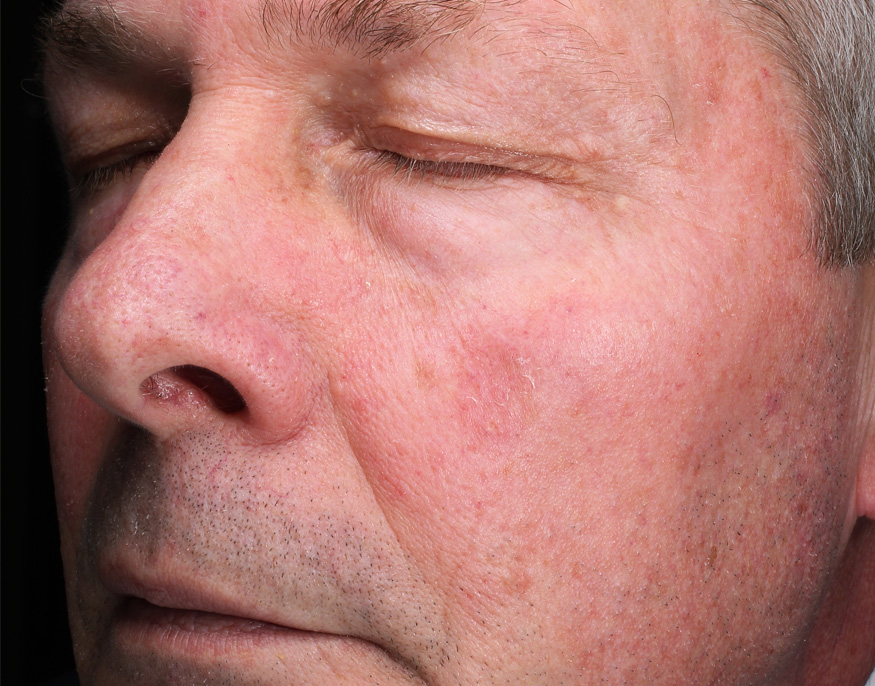 BEFORE
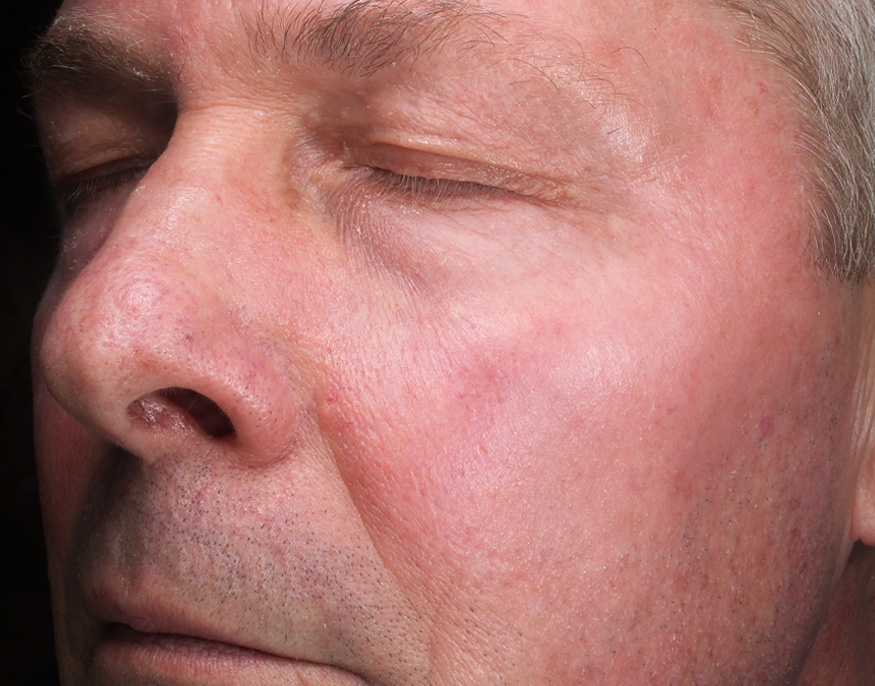 AFTER
AFTER
Rosacea
Reduce redness, diminish visible capillaries, and improve skin tone uniformity.
Detailed Treatment Profiles
Detailed Treatment Profiles
In-depth information on each resurfacing option.
IPL – Intense Pulsed Light
① How It Works
IPL uses broad-spectrum pulsed light selectively absorbed by vascular and pigmentary targets responsible for facial redness. The light energy simultaneously targets dilated vessels and irregular pigments, causing controlled coagulation of the vessels and gradually reducing redness and spots.
Unlike single-wavelength lasers, IPL delivers multiple wavelengths at once—making it an effective option for patients with both diffuse redness and signs of photoaging.
Key information
Anesthesia
None
Invasiveness
Non-invasive
Duration
20 to 45 min
Recovery
Minimal (0-24h)
Discomfort
Low
Session
3 to 5 recommanded
② What to Expect
Sessions last between 20 and 45 minutes, depending on the treatment area. A mild warm sensation and brief snapping feelings may be experienced during pulses — generally well tolerated without anesthesia.
Mild post-treatment redness is possible and typically resolves within a few hours. A series of 3 to 5 sessions is generally recommended, depending on the severity of the redness. Sun avoidance and applying sun protection are essential before and after treatment.
Ideal for:
- Diffuse facial redness
- Rosacea with pigment spots
- Fair to medium skin phototypes
- Combined redness and photoaging
③ Results
Results develop gradually over several weeks as the body naturally clears the treated vessels and pigments.
Visible improvement in redness
Improved skin tone uniformity
Fotona FRAC3® Laser
① How It Works
Fotona's FRAC3® laser delivers controlled thermal micro-stimulations targeting specific areas of the skin. This selective heat promotes natural skin renewal, gradually reduces rosacea-related redness, and improves tone uniformity.
Being non-ablative, the skin surface remains intact throughout treatment, allowing minimal recovery time.
Key information
Anesthesia
None
Invasiveness
Non-invasive
Duration
30 to 45 min depending on the area
Recovery
Minimal (0 to 24h)
Discomfort
Low
Session
Series recommended
② What to Expect
Sessions last 30 to 45 minutes. A progressive warming sensation is felt during treatment — generally well tolerated without anesthesia. Mild redness may occur after treatment and usually resolves within a few hours.
A series of sessions is recommended depending on the severity of the redness and individual skin response.
Ideal for:
- Different skin types
- Redness with texture irregularities
- Minimal downtime desired
- Complement to other lasers
③ Results
Results are generally observed in the weeks following each session. Results are progressive and build up over the course of the treatment series.
Significant improvement in redness
Improved skin tone uniformity
Noticeable transformation in overall skin quality
Vascular Laser
① How It Works
Vascular lasers emit wavelengths selectively absorbed by oxyhemoglobin in targeted blood vessels. This absorption generates heat within the vessel, causing controlled damage to its wall and triggering its gradual closure and natural reabsorption by the body.
Surrounding skin tissues remain unharmed.
Key information
Anesthesia
Topical numbing cream
Invasiveness
Low
Duration
20 to 40 min
Recovery
1 to 3 days
Discomfort
Low to moderate
Session
1 to 3 recommanded
② What to Expect
Sessions last 20 to 40 minutes, depending on the number and size of the vessels treated. A snapping sensation may be felt during the pulses.
Mild redness and minor bruising may occur after treatment and typically resolve within a few days. The number of sessions depends on the extent of the vessels and individual response.
Ideal for:
- Clearly defined vessels
- Telangiectasias on the nose and cheeks
- Vascular subtype of rosacea
- Targeted localized treatment
③ Results
Treated vessels fade gradually over 4 to 8 weeks
Significant reduction in visible vessels after 1 to 3 sessions
Highly effective for individual well-defined vessels
Ready to reduce
redness and regain confidence?
Book your free medical consultation. Our physicians will evaluate your skin and recommend the approach best suited to your needs.